May 1, 2026
The Holiday US Workers Built Was May 1. The One the State Gave Them Was September.
May Day was set in Chicago in 1884 and kept by 80-some countries ever since. The United States put its own labor holiday in September instead, and signed the bill six days before federal troops broke the Pullman Strike. The date on your calendar is not neutral. It never was.
Welcome to Organized Labor. We tell the story of working people organizing against capital, every week, free to read. We launch on May 1, and only one story belongs at the top of the stack.
The deadline was set in Chicago
In October 1884, the Federation of Organized Trades and Labor Unions met in convention in Chicago and passed a resolution: "eight hours shall constitute a legal day's labor from and after May 1, 1886." Two years' notice. Not a lobbying ask. A strike threat with a calendar date attached. FOTLU became the American Federation of Labor in 1886, the same year the deadline came due.
When the day arrived, around 340,000 workers at roughly 13,000 establishments walked off the job across the country. In Chicago, 80,000 marched up Michigan Avenue, led by the anarchist organizer Albert Parsons, who would be dead inside 18 months. Three days later a bomb went off at a rally at Haymarket Square, eight organizers were put on trial, and four were hanged.
The world picked up what America put down
In July 1889, the founding congress of the Second International met in Paris. A French delegate named Raymond Lavigne proposed a resolution calling for "a great international demonstration" on a fixed day, in every city, demanding the eight-hour workday. The date they fixed was May 1, 1890, and the resolution said why: the American Federation of Labor had already scheduled its own demonstration for that day.
Europe did not hand Americans May Day. Americans handed it to the world. The date came from Chicago. The rest of the planet noticed.
The holiday the state could tolerate
The United States already had a different labor holiday in circulation. The first Labor Day parade was organized by the New York Central Labor Union on September 5, 1882. Credit for proposing it goes to either Peter J. McGuire of the carpenters or Matthew Maguire of the machinists. Maguire was a socialist who later ran for vice president on the Socialist Labor Party ticket. The AFL preferred, over time, to credit McGuire. Take that for what it is worth.
For 12 years, September Labor Day remained unofficial at the federal level. Then, in the summer of 1894, the country was on fire. Workers at the Pullman Palace Car Company had struck over wage cuts. The American Railway Union had thrown a nationwide boycott behind them. Rail traffic was shutting down across half the country.
On June 28, 1894, President Grover Cleveland signed S. 730, introduced by Senator James Henderson Kyle of South Dakota, making the first Monday in September a federal holiday. It passed both houses unanimously. Six days later, on July 3, 1894, Cleveland ordered federal troops into Chicago to break the Pullman Strike.
The labor historian Richard Schneirov notes that unions were a Democratic constituency and a Democratic president putting down a strike "didn't look good." What is not in dispute is the sequence. The holiday was signed. The bayonets followed. September was chosen over May because September carried no socialist memory, and because four months sit between May 1 and the first Monday of September. That distance was the point.
The receipt
More than 80 countries today observe May 1 as a workers' public holiday. The United States, the United Kingdom, and Canada are the notable exceptions. Every September, US workers get a three-day weekend engineered to be apolitical. Every May 1, the rest of the world marks a holiday American workers built with a two-year countdown and a general strike. The choice between those dates was not an accident. It tells you what kind of memory the ruling class was willing to let working people keep.
The United States did not forget May Day. It chose September instead, on purpose, while the bodies were still warm. Today is May 1. Welcome.
Sources
- The Brief Origins of May Day, Eric Chase (Industrial Workers of the World)
- Labor History: May Day, Fighting for the Eight-Hour Day (American Postal Workers Union)
- Resolution of the International Workers' Congress of Paris, July 14-20, 1889 (Marxist Internet Archive)
- Birth of a Holiday: The First of May, Eric Hobsbawm (Jacobin, 2017)
- Who Founded Labor Day? The Answer Is Complicated (TIME, September 4, 2020)
- How a Deadly Railroad Strike Led to the Labor Day Holiday (History.com)
- International Workers' Day, country-by-country observance (Wikipedia)
Archival images (11)Show
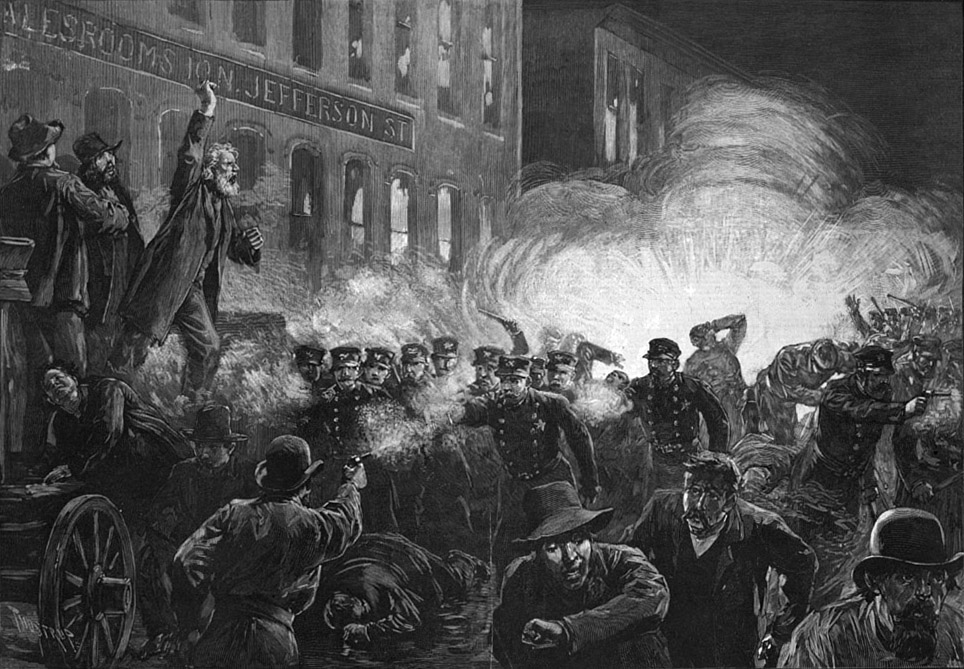
The Anarchist riot in Chicago: a dynamite bomb exploding among the police
Thure de Thulstrup, Harper's Weekly, vol. 30, no. 1534 (May 15, 1886), pp. 312-313.
public-domain
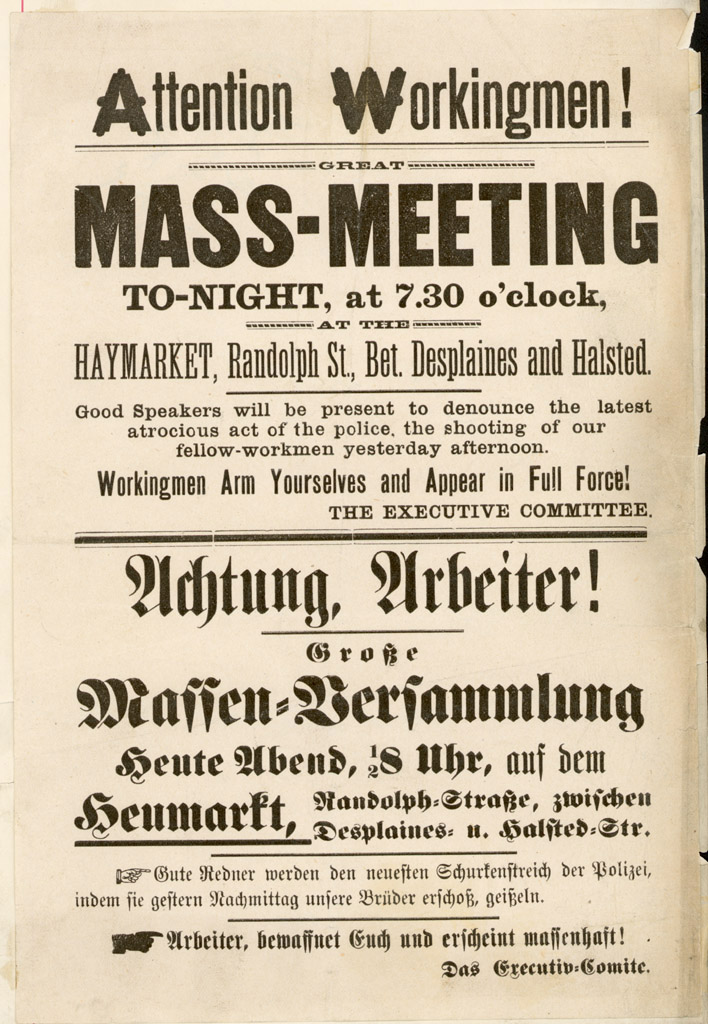
Haymarket meeting flier, May 4, 1886
Anonymous, bilingual English/German flier, Chicago, May 4, 1886. Chicago History Museum.
public-domain
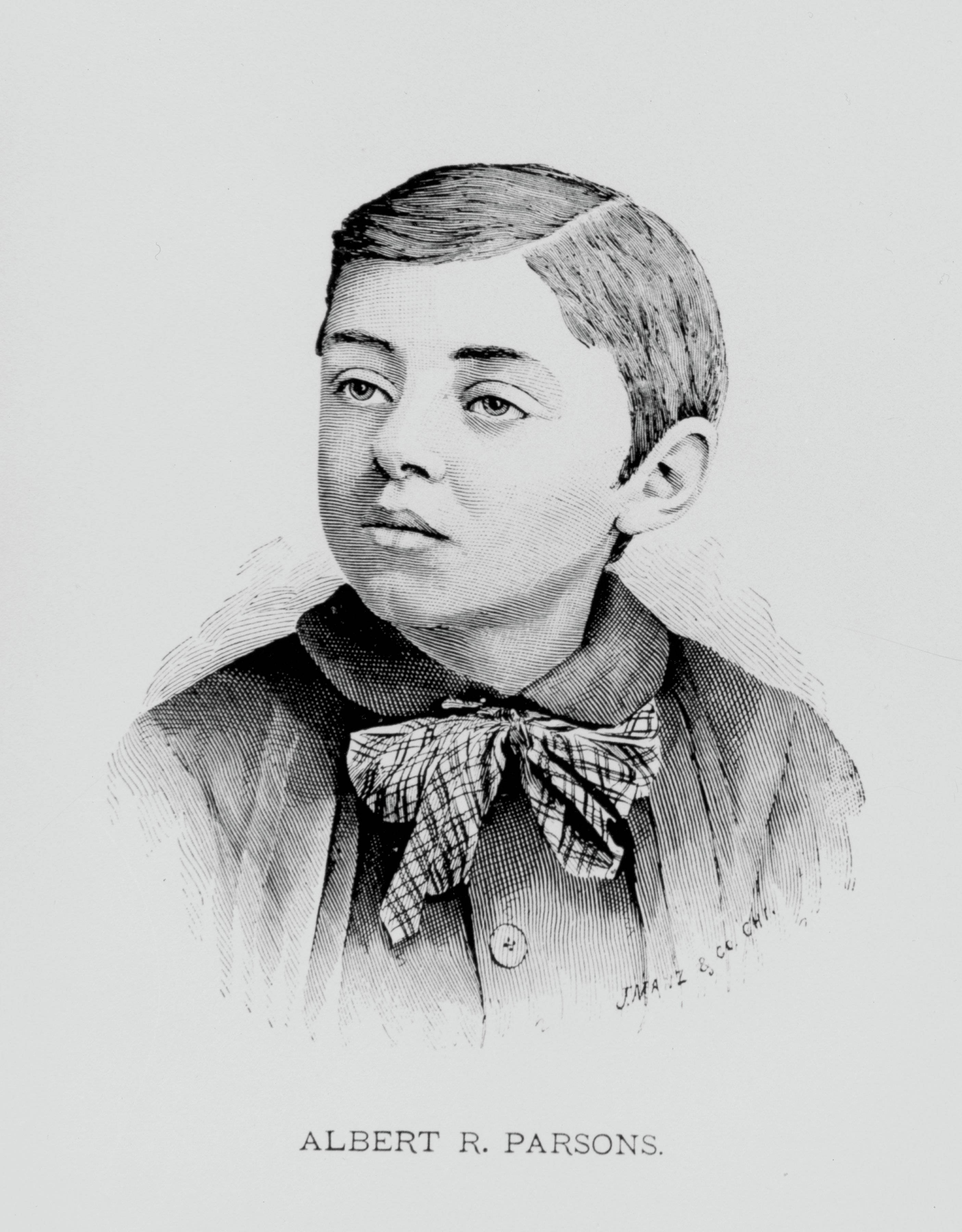
Albert R. Parsons, c. 1890
Unknown photographer, c. 1890. Newberry Library, Chicago and the Midwest collection (NBY 1514).
public-domain
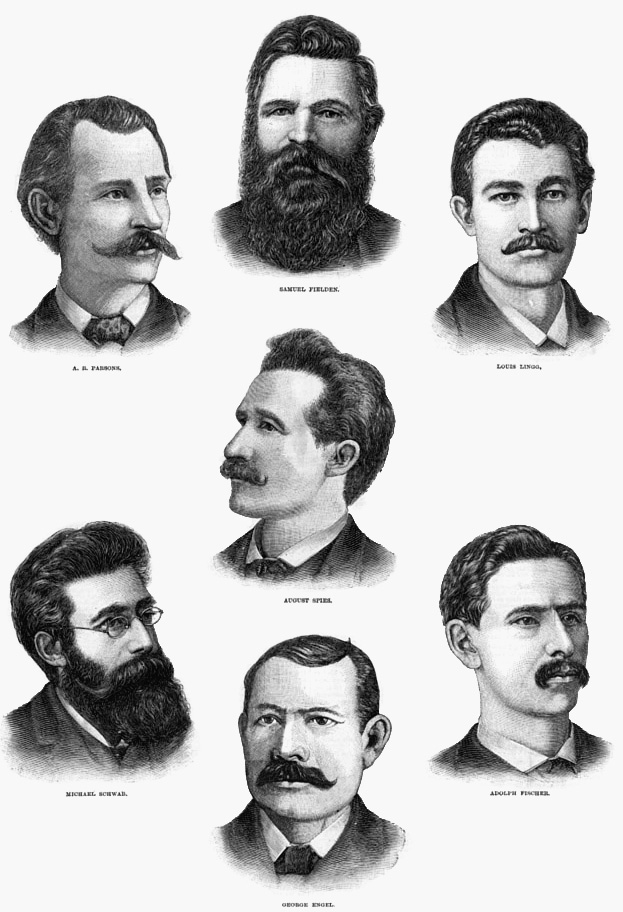
The Haymarket Martyrs
Frank Leslie's Illustrated Newspaper, engraved portraits of the seven defendants sentenced to death, 1887.
public-domain
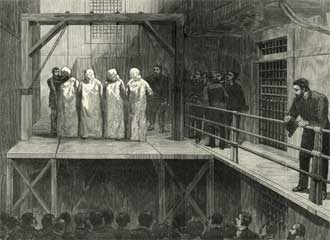
Execution of Spies, Parsons, Fischer, and Engel
Unknown engraver, Chicago, November 11, 1887.
public-domain
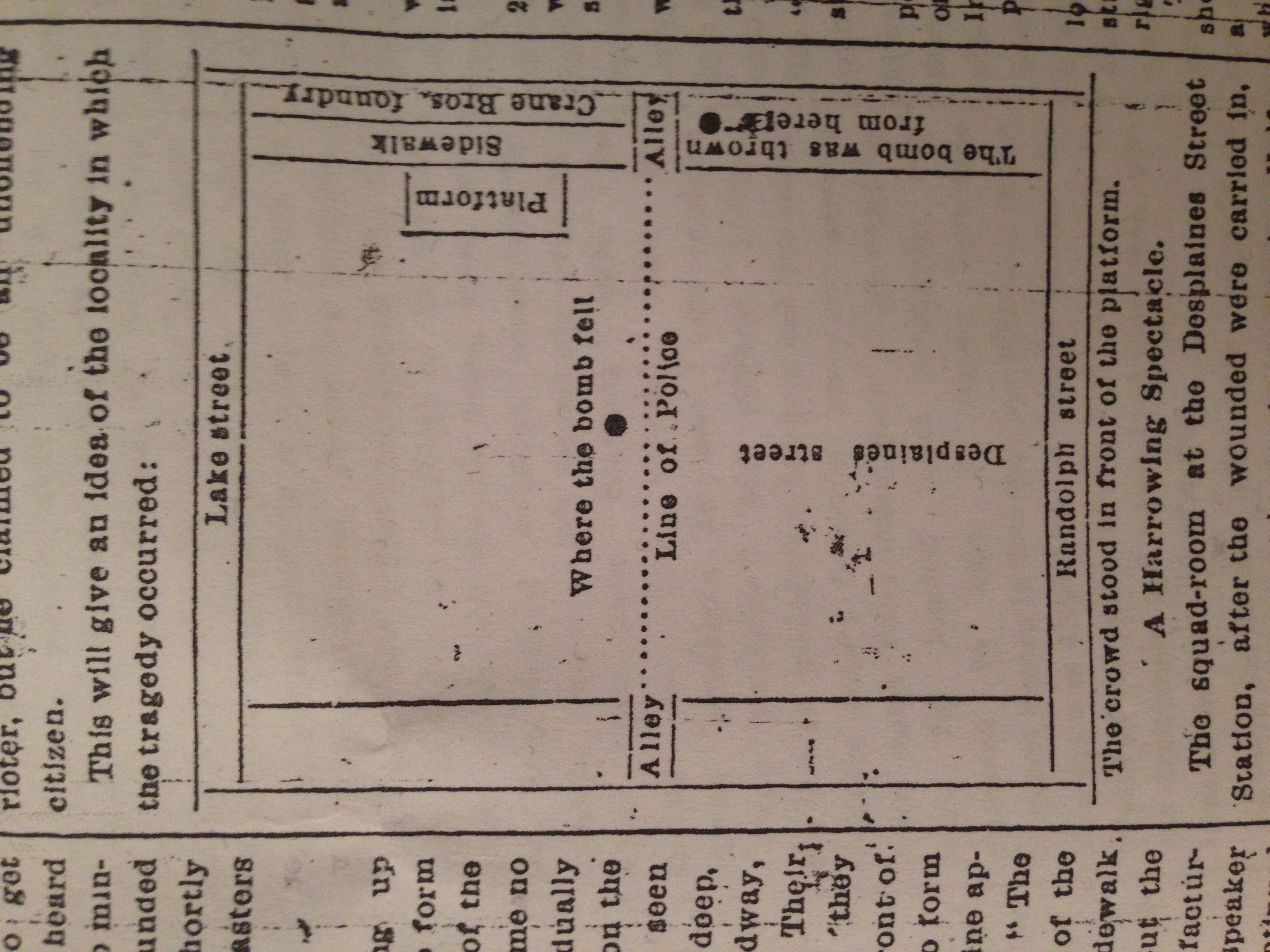
Map of Haymarket Square, Chicago Tribune, May 5, 1886
Chicago Tribune, map of the bombing site, May 5, 1886.
public-domain
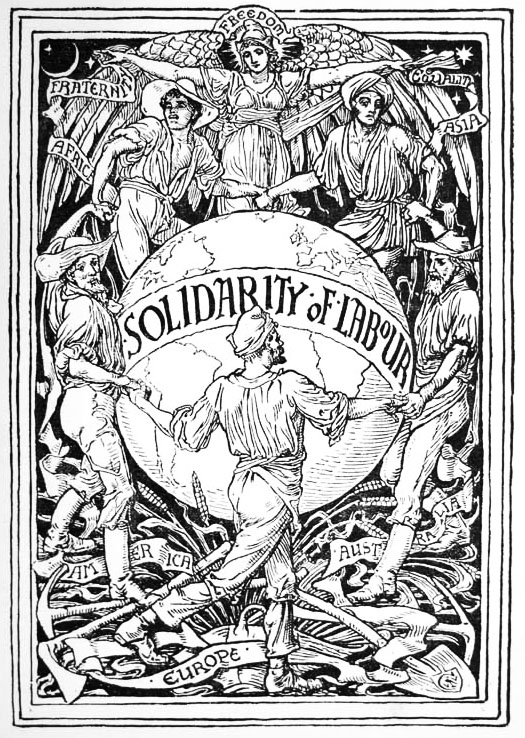
The Solidarity of Labour
Walter Crane, 1889. Commissioned for the first international May Day commemoration.
public-domain
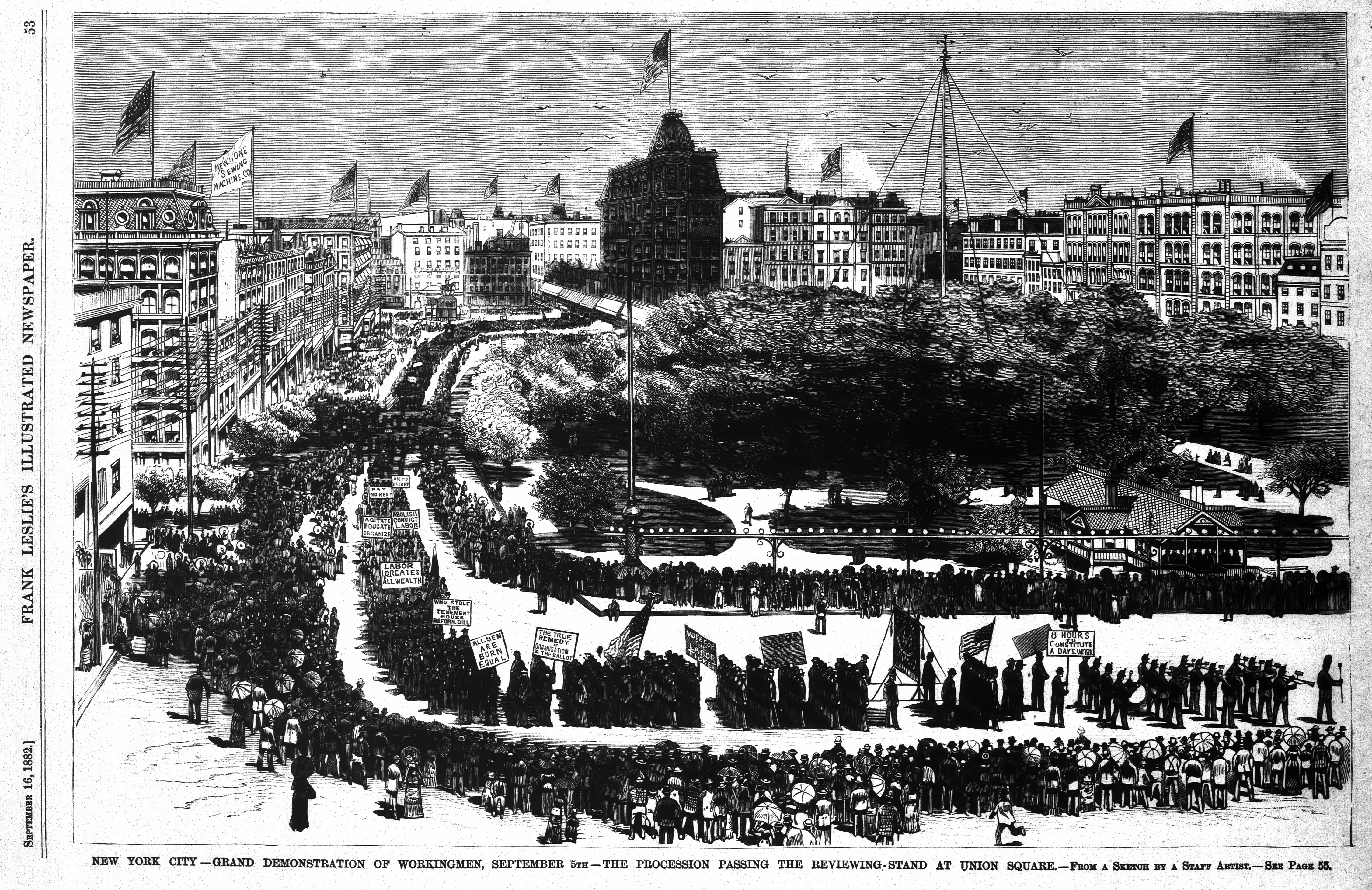
First Labor Day Parade, New York City, September 5, 1882
Staff illustrator, Frank Leslie's Illustrated Newspaper, September 16, 1882.
public-domain
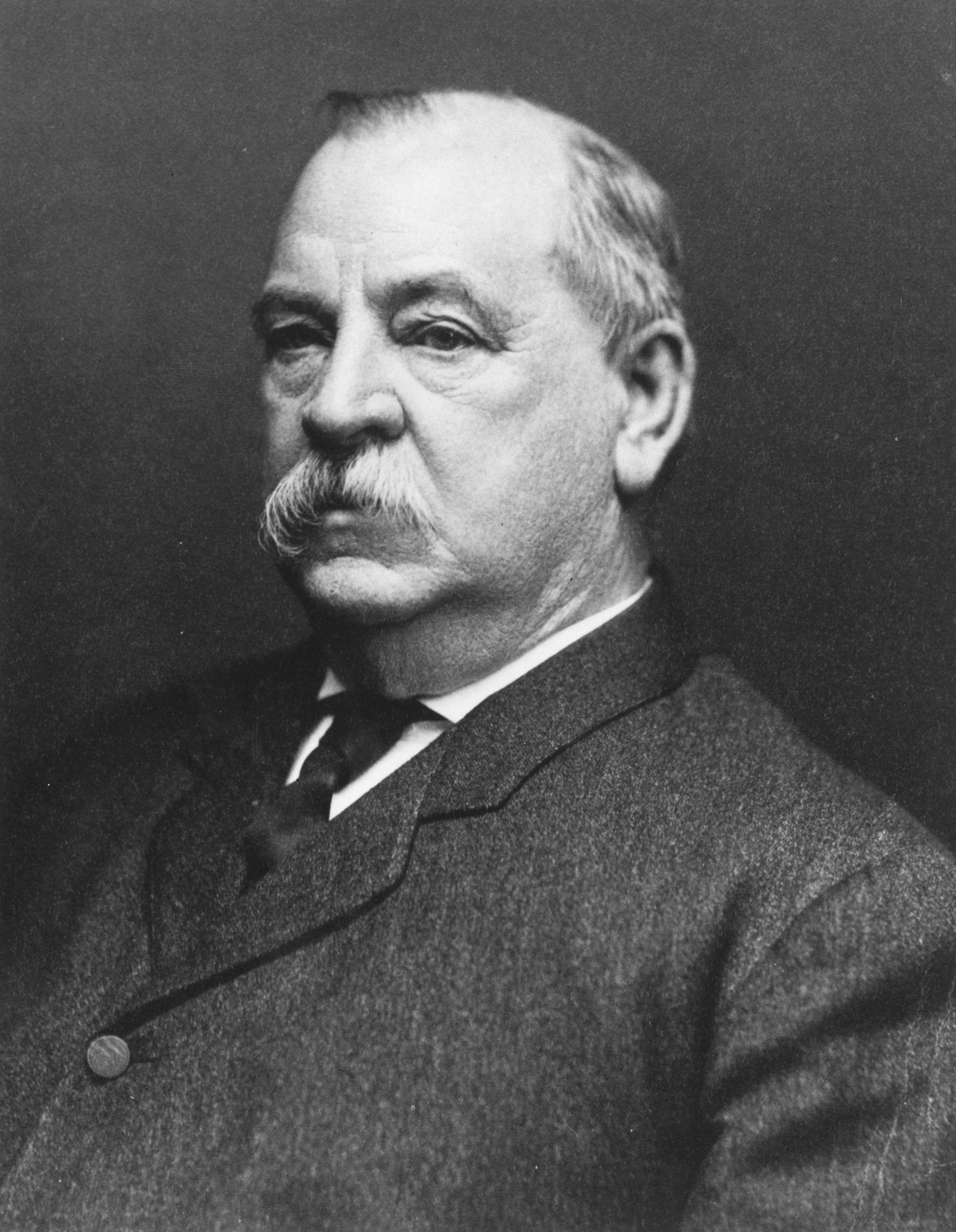
Grover Cleveland
National Archives and Records Administration, NARA Identifier 518139.
public-domain
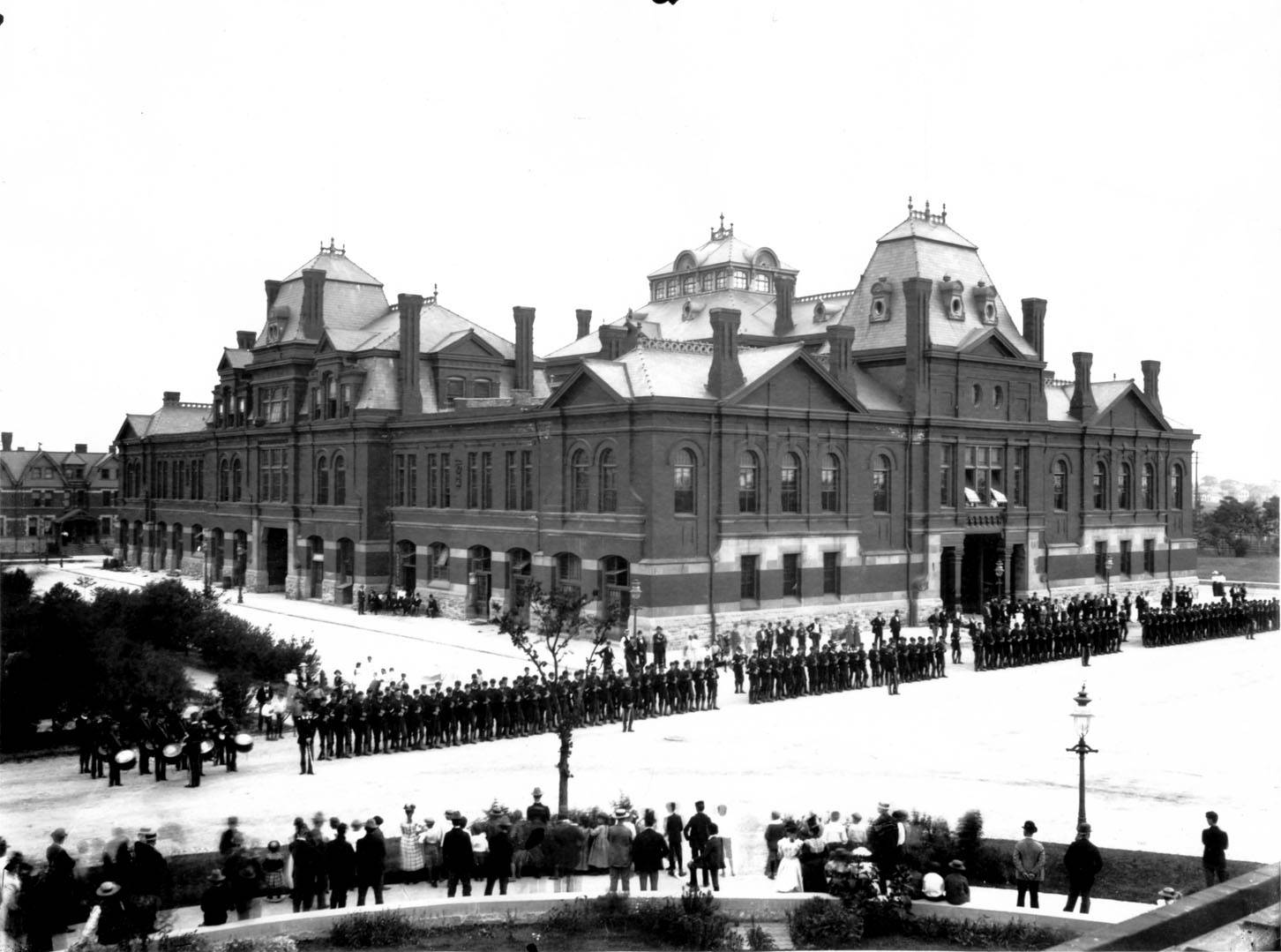
Pullman strikers outside the Arcade Building, 1894
Pullman Company photograph, 1894. Pullman Museum.
public-domain
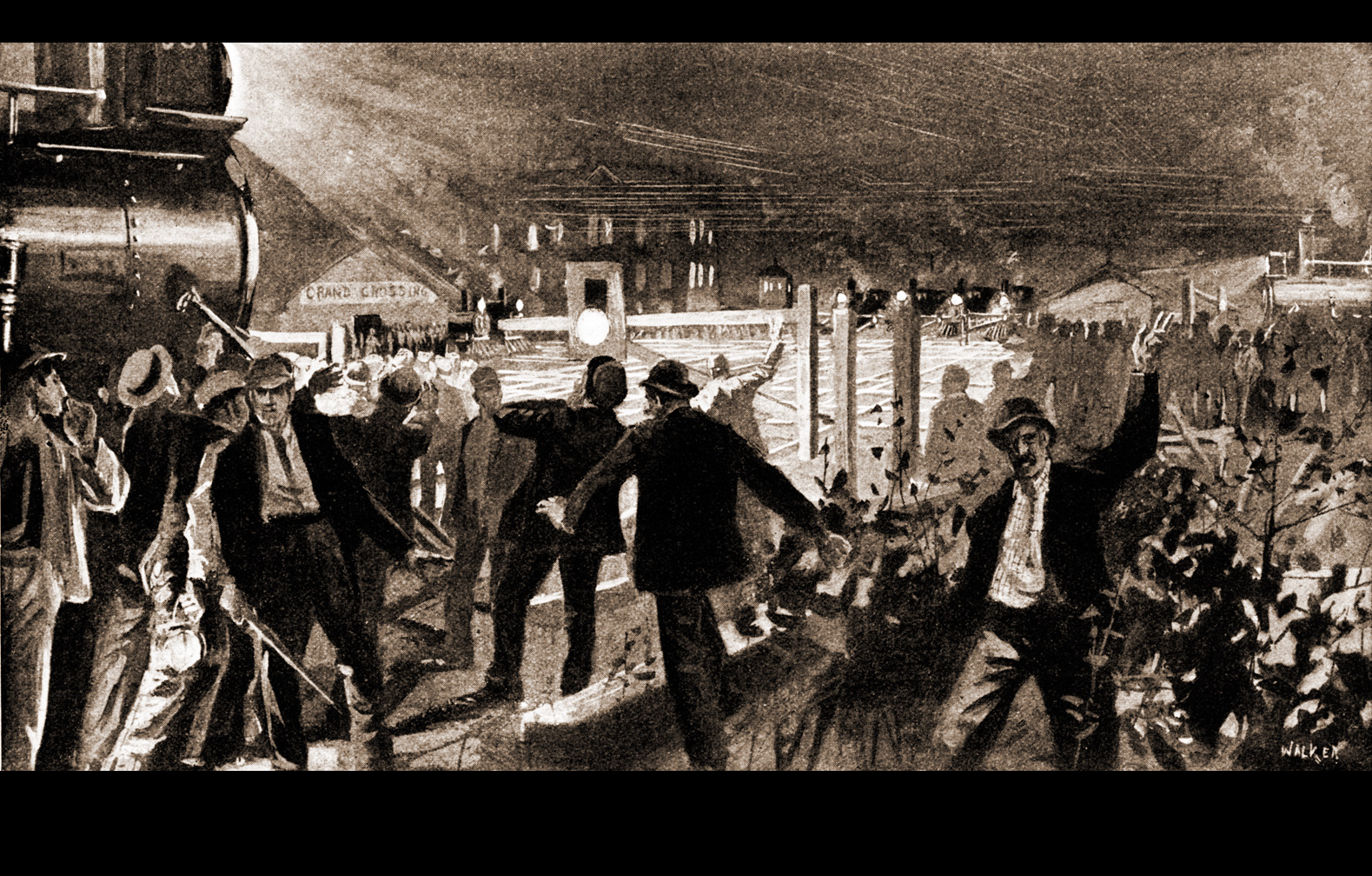
American Railway Union blockade at Grand Crossing, Chicago
Walker, Harper's Weekly, vol. 38, no. 1960 (July 14, 1894), p. 657.
public-domain
Newsletter signup